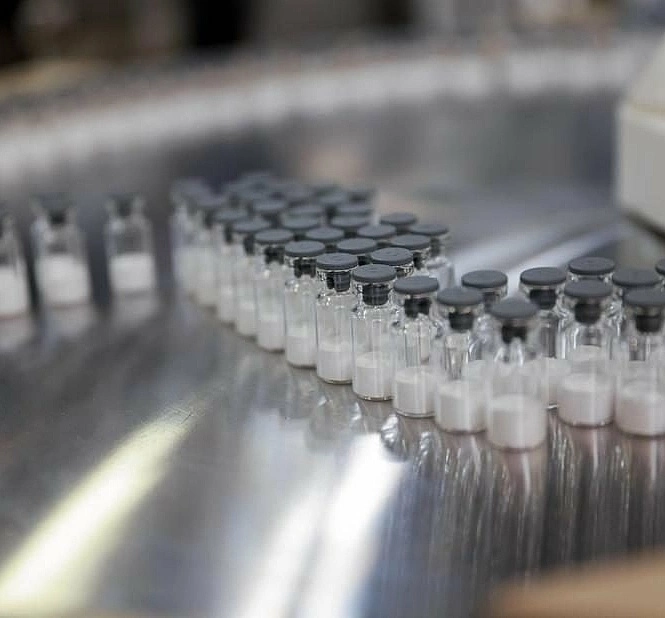

Laboratory work becomes more demanding when an experimental material contains several components. Researchers need to understand what they are working with, keep the study conditions consistent, and make sure that the resulting observations can be interpreted clearly.
This makes complex mixtures a useful subject within laboratory methodology. GLOW peptide blend by AZOTH can be considered from this general research perspective, focusing on how scientists approach multi component materials rather than making assumptions about their effects.
A complex mixture can create more variables
A research experiment works best when the important variables are understood.
With a multi component material, an observed change may have more than one possible explanation. One component could be associated with the result, several components could contribute, or the interaction between them could matter.
That does not make the experiment impossible. It simply changes how researchers need to think about the design.
The research question should determine which variables need to be controlled and which comparisons will be useful.
Clear comparisons make results easier to interpret
Researchers need something meaningful against which to compare their observations.
A control condition can provide a baseline. Other experimental conditions may allow researchers to examine what happens when one variable changes.
For complex mixtures, comparisons might involve:
- A baseline condition
- The complete mixture
- Different experimental conditions
- Individual components where relevant
- Changes in concentration or preparation
The appropriate comparison depends entirely on the research question.

A study does not necessarily need to examine every possible variation. It needs enough control to answer the question it was designed to investigate.
Documentation becomes more valuable as complexity increases
A complex study can produce a large amount of information.
Researchers therefore need records that allow them to trace the experiment from beginning to end. Documentation can help explain why two experiments produced different observations or why one sample was handled differently from another.
Useful records may cover:
- Material identification
- Sample or batch information
- Preparation details
- Experimental conditions
- Control conditions
- Measurements
- Observations
- Deviations from the planned procedure
For GLOW peptide blend by AZOTH, the broader methodological point is straightforward. A multi component research material needs to be considered alongside the information and conditions surrounding its use.
The material itself is only one part of the experiment.
Repetition can expose hidden differences
An experiment that produces an interesting result once may lead to further testing.
Researchers can repeat the work under comparable conditions and see whether a similar pattern appears. If the result changes, that difference may provide another useful clue.
Perhaps the preparation was different. Maybe a laboratory condition changed. There could also be variation in the material or measurement process.
Repeated experiments give researchers more opportunities to identify these differences.
They can also show whether an observation appears stable enough to justify additional investigation.
Quality checks support reliable laboratory work
Research methodology also involves checking whether the experimental material and procedures are suitable for the study.
Depending on the laboratory, researchers may review analytical information, confirm sample identity, maintain consistent procedures, and document relevant observations before interpreting the results.
These checks do not guarantee a particular outcome.
They reduce uncertainty around the experimental process and give researchers better information when evaluating what happened.
That distinction matters. Good methodology cannot force a desired result. It can only make the investigation more controlled and understandable.